


Turo protection plans decide two things every host cares about: how much of each trip you keep, and how much you pay out of pocket when a guest damages your car. Pick the wrong one and you either give away earnings you didn't need to, or you carry more risk than your bank account can handle.
Turo now calls these host "earnings plans", and the line-up changed for trips booked on or after January 7, 2026. Everything below reflects Turo's US pages at the time of writing (October 2026). Plans change, so confirm the details on Turo's earnings plans in detail page before you choose.
The three Turo protection plans at a glance
US hosts now choose between three plans. The trade is simple: a bigger share of the trip price means a bigger damage responsibility on each claim.
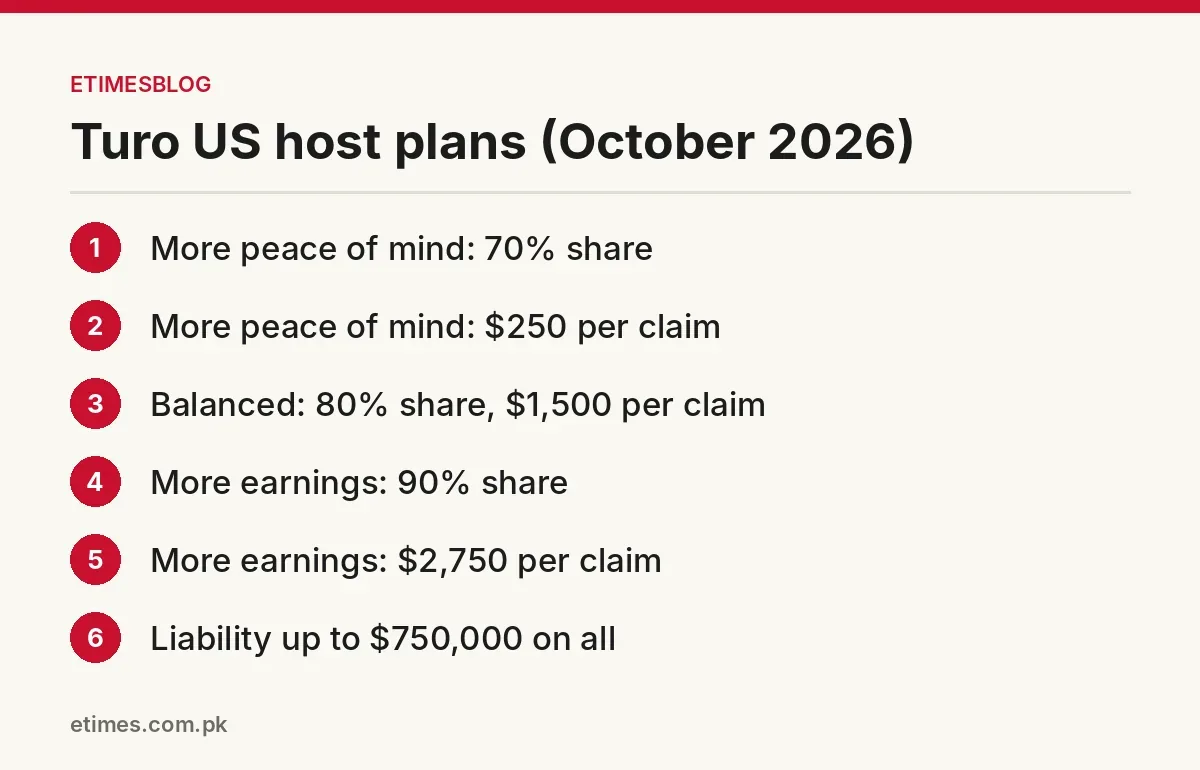
More peace of mind
Host share: 70% of the trip price.
Damage responsibility: $250 per physical damage claim.
Window to invoice for fuel, charging or extra miles: 5 days.
Balanced
Host share: 80%.
Damage responsibility: $1,500 per claim.
Incidental invoice window: 4 days.
More earnings
Host share: 90%.
Damage responsibility: $2,750 per claim.
Incidental invoice window: 3 days.
Cities with a variable host share
In Austin, Dallas, Detroit, Las Vegas, Maui, Philadelphia, Phoenix, San Diego and Seattle, Turo adjusts the share by how far ahead a trip is booked. The ranges are 65–80% on More peace of mind, 75–90% on Balanced and 85–100% on More earnings. Trips booked further ahead generally earn a higher share.
What Turo earnings plans cover
Every plan includes the same two building blocks. The difference between plans is your share and your damage responsibility, not the type of cover.
Physical damage reimbursement
If a guest damages your car, Turo reimburses eligible repair costs above your damage responsibility. Turo's host insurance page caps this at the lesser of the repair cost, the car's actual cash value or $200,000. Covered causes include collision, theft, fire not caused by mechanical failure, vandalism, animal strikes, falling objects and acts of nature.
Turo is clear that this is a contractual allocation of risk, not insurance. Washington is the exception noted on that page, where physical damage is covered by insurance Turo buys.
Third-party liability insurance
All plans include liability insurance under a Travelers policy issued to Turo, up to $750,000 combined single limit, unless a state or airport requires more. It covers injury and property damage to other people, not your own car. New York is different: hosts get state minimum liability by default and can opt into More peace of mind for a $300,000 combined limit.
What the plans don't cover
This is where new hosts get caught. Read the exclusions before you decide how much risk to take on.
The main exclusions
Wear and tear, inside and out, on every plan. Turo's host page describes exterior wear as dings, dents, cracks or scratches of three inches or less.
Lost income and replacement cars while your car is in the shop.
Diminished value after a repair.
Mechanical failure and gradual deterioration such as rust or fading.
Damage during the delivery period, before the trip starts. Liability still applies, but physical damage reimbursement does not.
Tire damage from defects, wear, dry rot, tread under 4/32 inch, wrong pressure, or tires six or more years old.
Underbody, bumper and air deflector scrapes.
Rules that can void a claim
Photos matter. Pre-trip photos must be taken within 24 hours before the trip and uploaded within 24 hours after it starts. Post-trip photos must be taken and uploaded within 24 hours of the trip ending, and photos without date, time and location metadata are invalid.
From August 18, 2026, Turo also says repairs at certain listed facilities are no longer reimbursed, and confirming a shop's eligibility is on you. Cars worth $125,000 or more need an active manufacturer-installed tracker.
The math: which plan pays more for your car?
The right answer depends on how much your car earns and how often you expect a claim. Here is a simple way to test it with your own numbers.
A worked example (hypothetical numbers)
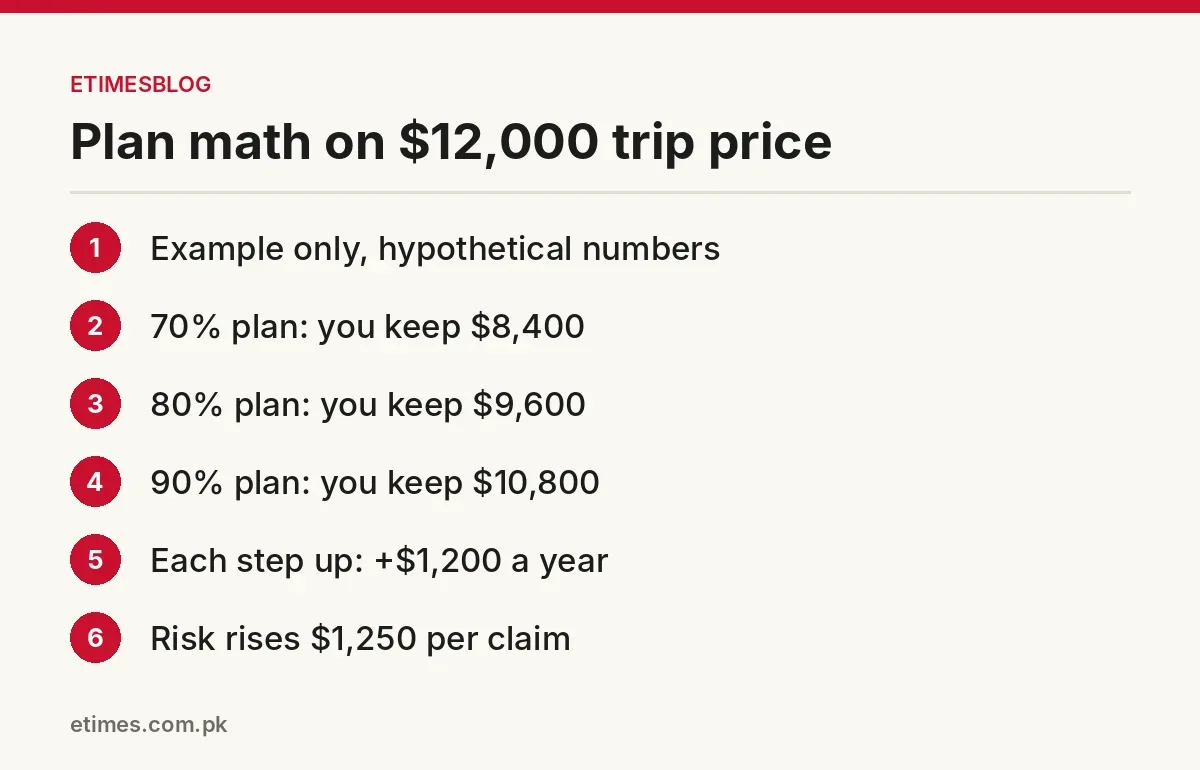
Say your car brings in $12,000 a year in trip price. These are example numbers, not Turo data.
More peace of mind (70%): you keep $8,400.
Balanced (80%): you keep $9,600.
More earnings (90%): you keep $10,800.
Moving from Balanced to More earnings adds $1,200 a year but raises your damage responsibility by $1,250 per claim. So in this example, one covered claim a year roughly wipes out the gain, and two claims put you behind.
Moving from More peace of mind to Balanced adds $1,200 but raises the damage responsibility by $1,250 as well. The same rule of thumb applies.
The rule of thumb
Divide the extra yearly earnings by the extra damage responsibility. If you expect fewer claims per year than that number, the higher-earning plan probably wins. If you expect more, or can't afford a surprise bill, take the lower risk plan.
Which plan should hosts pick?
There is no single right plan. Here is how I'd think about it.
Pick More peace of mind if
You are new and don't know your claim rate yet.
You don't have cash set aside for a $1,500 or $2,750 bill.
Your car is expensive to repair, or books with lots of short trips and handoffs.
Pick Balanced if
You have a few months of history and claims have been rare.
You keep a repair reserve of at least $1,500 per car.
Pick More earnings if
You have a track record with few claims and a cash reserve per car.
Your cars are cheap to fix, and small damage often falls under wear and tear anyway.
You screen trips carefully and take thorough photos every time.
Turo says you can switch plans at any time, but the change only applies to future trips, not ones already booked. I'd start conservative and review the plan once you have real claim history.
Common mistakes hosts make with Turo protection plans
Most of the expensive surprises I hear about come from the same handful of habits. None of them are about the plan itself.
Choosing by host share alone. A 90% share looks great until the first $2,750 bill arrives in a slow month.
Rushing the photos. Photos taken outside the 24-hour windows, or without metadata, can sink a claim you would otherwise win.
Expecting small scuffs to be covered. Short scratches and dings usually count as wear and tear on every plan.
Running old tires. Tires six or more years old, or below 4/32 inch of tread, fall outside tire damage cover.
Forgetting downtime. No plan pays for lost bookings while the car is in the shop, so budget for it.
Leaving the plan on autopilot. Review it every few months against your real claim history and your actual Turo host earnings.
Your own insurance still matters
Turo's plans only apply during Turo trips. Turo's vehicle protection page says you still need your own car insurance, and that a personal policy likely excludes coverage during Turo trips. Call your insurer and ask in writing.
Off-trip insurance
There is also the time between trips: driving to a car wash, a mechanic or a delivery. Turo's host hub has an off-trip insurance page listing commercial-style policies built for listed cars, with eligibility that varies by state and fleet size. Compare it with a quote from a local commercial agent before you buy. For a wider look, read our guide to rental fleet insurance.
If a guest does damage your car, our walkthrough on what to do after a renter damages your car covers the claim steps. More guides are in our insurance and protection section.
FAQ
What happened to the 60, 75, 80, 85 and 90 plans?
Those older plans apply to trips booked before January 7, 2026. Trips booked on or after that date use the three current plans.
Is Turo's damage protection insurance?
No. Turo describes physical damage reimbursement as a contractual allocation of risk, with Washington as an exception. The liability part is insurance, issued by Travelers.
Does any plan cover lost income while my car is repaired?
No. Turo's plans exclude lost hosting income and replacement vehicles.
Can I change my plan later?
Yes, at any time, but only future trips use the new plan.
Final thoughts
Turo protection plans are a bet on your own claim rate. If you don't know that rate yet, pay a little more for lower risk, keep a repair fund, and take perfect photos on every trip. Once your history shows claims are rare, run the math again and move up if it pays.
This is general information, not legal, tax or insurance advice. Check the official terms for your situation.
ETIMESBLOG is independent and not affiliated with or endorsed by Turo, Getaround or any company mentioned.


Comments