


Rental car maintenance is the part of this business that nobody brags about, but it decides whether your cars stay listed, whether your claims get paid and whether renters come back. A personal car can get away with a missed oil change. A car that sees a new driver every few days usually can't.
This guide gives you a simple schedule for one to ten cars, plus recalls, tires, record keeping and what Turo currently expects from hosts. Your owner's manual stays the final word on intervals. This is the system that makes sure it actually gets followed.
Why rental car maintenance is different from looking after your own car
When you drive your own car, you notice the new noise or the soft brake pedal. In a rental, the person who notices is a stranger who may not tell you. You need a routine that catches problems without relying on anyone's memory.
Rental use often looks like the severe service schedule
Most owner's manuals list two sets of intervals: a normal one and a severe service schedule for harder use. According to Capital One's explainer on severe-duty service, conditions that count include lots of short trips, low-speed city traffic in hot weather, dusty roads, towing and commercial uses such as taxis and delivery vehicles.
Plenty of rental cars tick several of those boxes. My advice: if your manual has a severe schedule, use it for any car that's booked more often than it sits. Extra oil changes cost far less than an engine or a lost month of bookings.
What Turo expects from hosts at the time of writing
Platform rules give you another reason to stay ahead. Turo's maintenance requirements page says US and Canadian hosts need an annual vehicle safety inspection and must maintain the car for every trip using its inspection checklist. At the time of writing (October 2026), the page lists a $100 violation fee in the US for things like unrepaired lights or safety equipment, plus a $350 roadside fee if roadside help is sent because of a maintenance issue.
The same page warns that your protection may be voided if a maintenance problem caused the damage. Turo also introduced a maintenance rating standard from February 26, 2025 for US and Canadian vehicles. Under it, a car can be unlisted if only 3 or fewer of its last 10 completed trips earn a 5-star maintenance rating, and getting it relisted requires a safety inspection by an ASE-certified mechanic.
A simple rental car maintenance schedule you can actually follow
The trick is to tie each task to something that already happens, like a trip ending, a day of the week or an odometer reading. Here's the schedule I'd use for a small fleet, from the most frequent checks to the least.
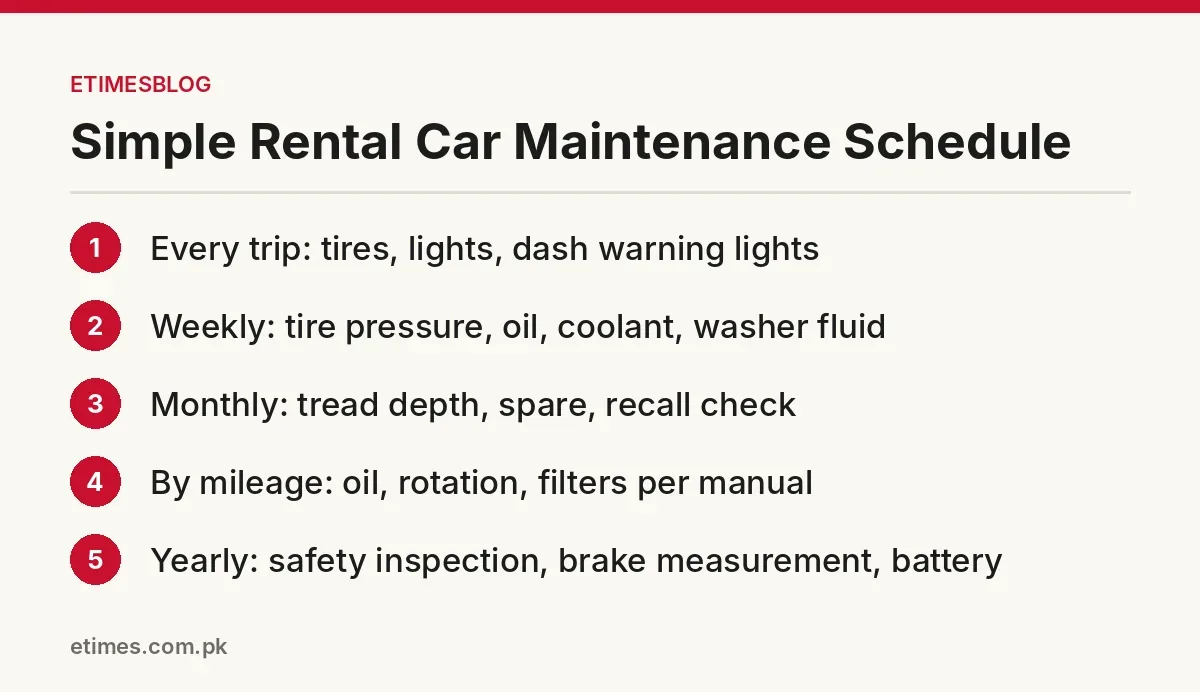
Every turnaround (between trips)
Walk around the car and look at all four tires for low pressure, bulges or damage.
Start the car and confirm there are no warning lights on the dash.
Test headlights, brake lights and turn signals. A helper or a reflective wall makes this quick.
Read the guest's messages for hints of noises, vibration or a pull to one side.
Note the odometer reading so mileage-based tasks don't sneak past you.
Every week or so
Check tire pressures with a gauge rather than by eye.
Check oil level, coolant and washer fluid.
Look at wiper blades and replace them if they streak.
Every month
Measure tread depth on every tire and check the spare, if the car has one.
Run each VIN through the recall lookup (more on this below).
Compare each car's mileage to its next due service so you can book it between trips.
By mileage: oil change interval, rotations and filters
Your oil change interval should come from the manual or the car's oil life monitor, not from a sticker or a habit. Capital One's article gives a GMC example: a 7,500-mile oil interval, with a note that the oil life indicator can come on sooner in severe conditions. Tire rotations, cabin and engine air filters and brake inspections also belong on the mileage list.
Here's a hypothetical example of how the math works. Say one car averages 1,800 miles a month and its manual's severe-service oil interval is 5,000 miles. That car needs an oil change about every 12 weeks, so you'd block a gap in the calendar every third month rather than waiting for the light.
Once a year
Get the annual safety inspection your platform or state requires and keep the paperwork.
Have the brakes measured, not just glanced at.
Check the battery and the age of each tire.
Tires and brakes: where problems show up first
Guests notice tires, and Turo's maintenance page says issues like bald tires can lead to an account review.
Tire tread depth and pressure
NHTSA's tire safety guidance says to check the pressure of all tires, including the spare, at least once a month when they're cold. Cold means the car hasn't been driven for at least three hours. Use the pressure on the label on the driver's door edge or in the manual, not the number printed on the tire.
On tire tread depth, NHTSA says tires should be replaced at 2/32 of an inch. A quick check is the penny test: put a penny in the tread with Lincoln's head upside down, and if you can see the top of his head, it's time for new tires. NHTSA also says that if your manufacturer recommends rotation, it's usually every 5,000 to 8,000 miles, and some manufacturers recommend replacing tires that are six to 10 years old regardless of tread.
For a rental, I wouldn't run tires down to that minimum. A guest who sees worn tires may rate maintenance lower, and that rating now counts on Turo.
Brakes
Brake wear depends on the car and how it's driven, so there's no single number to follow. I'd ask the shop to measure pads and rotors at every oil change and note it on the invoice. Over a few visits you'll see how fast each car wears.
Check open recalls on every car, every month
Recall repairs are free, so there's no good reason to rent a car with open recalls. New recalls keep getting announced, so a one-time check isn't enough.
How to check
Use the NHTSA recall lookup and enter each car's VIN or plate. NHTSA says the search shows whether that specific vehicle has an unrepaired recall. It doesn't cover recalls more than 15 years old unless the manufacturer offers more. NHTSA also notes that some recent recalls may not have all VINs identified yet, so it advises checking regularly.
If a recall shows up, NHTSA says to contact a local dealer to have it fixed for free. You can also sign up for recall alerts through NHTSA's free SaferCar app.
What the Safe Rental Car Act says
Federal law already limits renting recalled cars for larger operators. According to Auto Rental News, the Safe Rental Car Act took effect June 1, 2016. It covers rental companies that use a fleet of 35 or more vehicles on average, and those companies generally can't rent a recalled vehicle until the fix is done.
Most small hosts are under that threshold, and the article didn't address peer-to-peer platforms. Even so, I'd treat it as the standard to follow. If a car has an open safety recall, block its calendar until it's repaired.
Keep a maintenance log that proves the work
A maintenance log does two jobs. It tells you what's due next, and it gives you proof if a platform, insurer or guest ever questions the condition of the car. Since Turo says protection can be voided when maintenance caused a claim, those records matter when you're dealing with rental car damage claims.
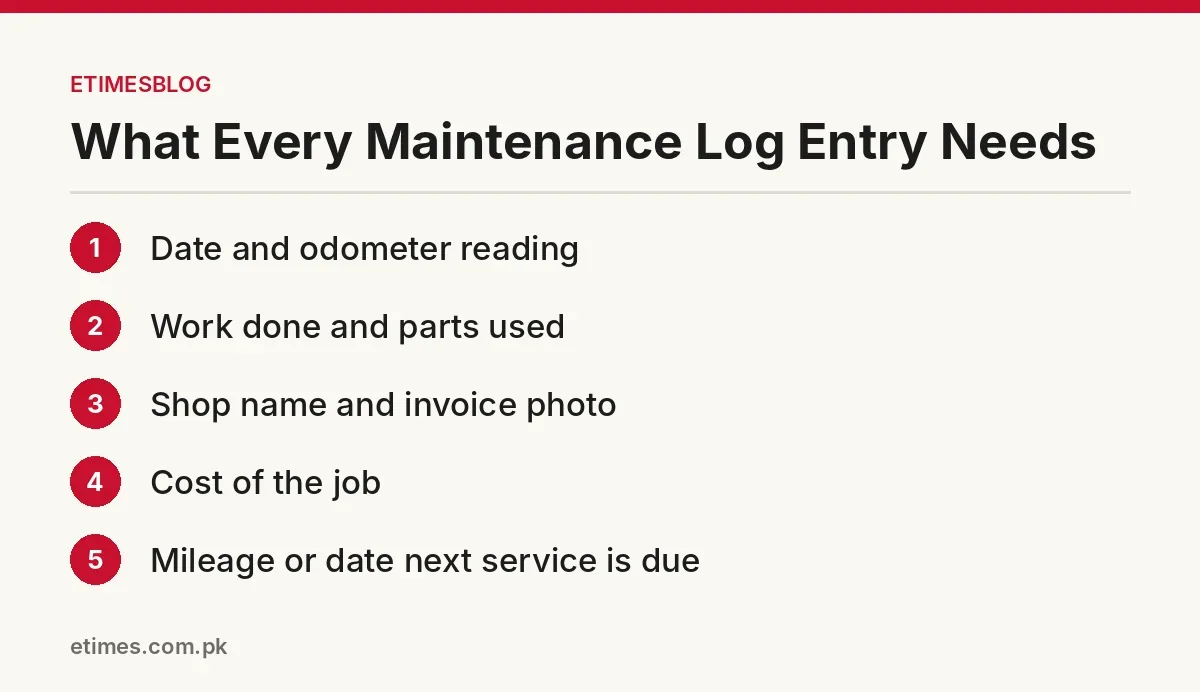
What to record
Date and odometer reading.
What was done and which parts were used.
Shop name, plus a photo of the invoice.
Cost, so you know what each car really costs to run.
The mileage or date when the next service is due.
A shared spreadsheet works for a few cars. Once you're juggling more, it may be worth looking at fleet management software that tracks mileage and sends reminders.
Long trips: who handles maintenance mid-trip
Monthly rentals can put thousands of miles on a car before you see it again. Turo's help article on routine maintenance for long trips says hosts handle routine maintenance on trips longer than 30 days, or with included distance above 3,000 miles in the US. It also says hosts are always responsible for routine maintenance costs.
The article describes two paths: the guest takes the car to a shop you choose (within two weeks by default), or you swap in another car through Turo. Approved work includes oil changes, tire rotations, air filters, fluids and wiper blades. Agree on shop and payment first.
Common mistakes and what I'd do instead
Following the normal schedule for a hard-working car. Use the severe schedule when the manual offers one.
Waiting for the guest to report problems. Many won't. The turnaround check is your early warning.
Checking recalls once at purchase. New recalls appear all the time, so make it monthly.
Booking cars back-to-back for weeks. If there's never a gap, service gets skipped. Block a maintenance day when the next service is close.
Cars with cheap, common parts make the schedule easier, so read up on the best cars for Turo before you buy. You'll find more guides like this in our fleet management section.
FAQ
How often should a rental car get an oil change?
Follow the owner's manual or the car's oil life monitor. If the manual has a severe service schedule, that's usually the better fit for a car that's rented often.
Does Turo require a safety inspection?
At the time of writing, Turo's maintenance requirements say US and Canadian hosts need an annual vehicle safety inspection. Check the current help page, since rules change.
What is the minimum tire tread depth?
NHTSA says tires should be replaced when tread is worn to 2/32 of an inch. For rentals, replacing them earlier helps avoid poor maintenance ratings.
Final thoughts
Good rental car maintenance isn't complicated. It's a short check at every turnaround, a few minutes each week and month, and services booked by mileage before they're due. Write everything down, check recalls monthly and use the severe schedule when your cars work hard.
This is general information, not legal, tax or insurance advice. Check the official terms for your situation.
ETIMESBLOG is independent and not affiliated with or endorsed by Turo, Getaround or any company mentioned.


Comments