


If you want to start a Turo business, the hard part isn't the listing form. It's picking the right car, getting your insurance and paperwork lined up, and running each trip like a small operation instead of a side gig. This guide walks through the steps in the order I'd do them, with the rules Turo publishes for US hosts at the time of writing (October 2026).
Turo changes its plans and fees often, so treat every number here as a snapshot. Before you commit money, check the linked help pages yourself.
Step 1: Decide What Kind of Turo Business You Want
There are two very different ways to host. One is listing the car you already drive on days you don't need it. The other is buying cars specifically to rent, which turns this into a real business with loans, insurance and repair bills to cover every month.
Side income vs. a small fleet
Listing your daily driver costs almost nothing up front. The trade-off is that guest trips will clash with your own plans, and wear lands on the car you rely on. A dedicated car gives you a full calendar to sell, but now the car has to earn its payment whether it books or not.
What I'd do: start with one car, run it for a few months, and only add a second once you know your local demand and your real costs. Plenty of new hosts buy three cars at once and learn the slow season the expensive way.
Check local rules before you buy anything
Peer-to-peer car sharing is regulated differently state by state. Turo's own list-your-car page warns that hosts in California and Oregon should be aware of existing peer-to-peer car sharing laws that may limit income in certain scenarios. Airports often have their own permit and parking rules too, so check them if you plan to deliver there.
Step 2: Check Turo Host Requirements and Vehicle Eligibility
Turo host requirements cover both you and the car. According to Turo's Listing a vehicle | US help article, you must be at least 21 years old to list in the US. You also need valid car insurance on the vehicle, and you must complete a host orientation before your listing goes live.
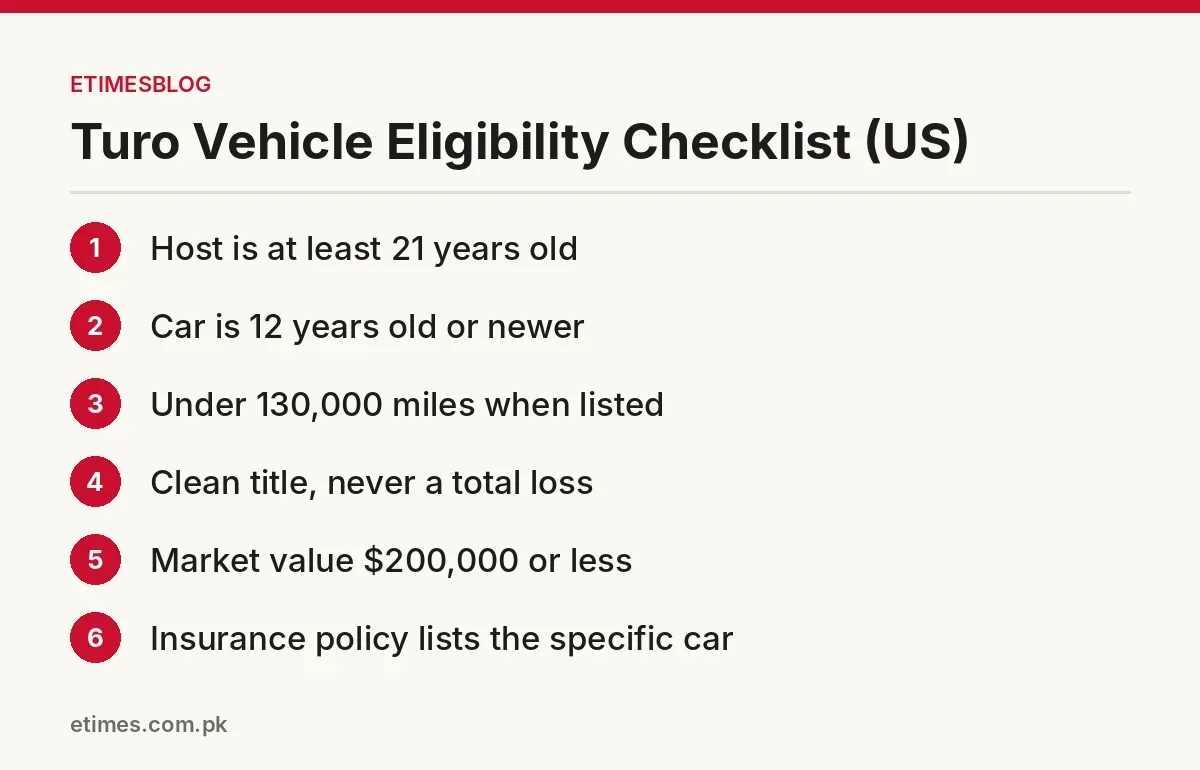
Turo vehicle eligibility rules
The Vehicle eligibility | US page (last updated July 2026) sets these main rules:
Age: a maximum of 12 years old, with exceptions for classic and specialty vehicles.
Mileage: under 130,000 miles when you list it.
Value: fair market value no higher than $200,000.
Title: clean title only, never branded or salvage, and never declared a total loss.
Registration: registered to you, or to an owner who has authorized you to list it. Dealer plates aren't allowed.
Vehicle type: no limousines, motorcycles, RVs, off-road vehicles or vehicles that need a commercial license.
One note: Turo's marketing page mentions model year 2010 or newer, while the help center says 12 years maximum. Go by the help center and confirm when you start the listing, because it's the more detailed rule.
Financed and leased cars
Turo says many financed cars can be listed, but you should read your financing agreement first. Most leases don't allow it, so call the leasing company before you list a leased car. Getting this wrong can put you in breach of your contract.
Step 3: Sort Out Turo Host Insurance
This is the step new hosts rush, and it's the one that can sink you. Turo's insurance requirements page says you must have a personal or commercial auto policy listing the specific vehicle. It also tells you to contact your insurer before listing, to confirm they allow car sharing.
What Turo covers and what it doesn't
During a trip, Turo's plans include third-party liability coverage of up to $750,000 (New York has different limits). Physical damage to your own car is handled through a contract with Turo for reimbursement, which Turo states is not insurance. The help page also warns that during a Turo trip your personal insurance may not apply.
Coverage between trips
Your car still needs coverage when it's parked between bookings or when you drive it to a handoff. Turo's host hub lists off-trip commercial insurance options through partners, with eligibility that depends on your state and fleet size. Compare those against quotes from a local commercial agent before you decide.
Insurance gets a fuller treatment in our guide to Turo protection plans and which one hosts should pick.
Step 4: Choose One of the Turo Earnings Plans
Every US host has to pick an earnings plan. In January 2026, Turo replaced its five old protection plans with three Turo earnings plans. Each plan sets your host share (the percentage of the trip price you keep) and your damage responsibility (what you pay per eligible damage claim).
More earnings: 90% host share, $2,750 damage responsibility.
Balanced: 80% host share, $1,500 damage responsibility.
More peace of mind: 70% host share, $250 damage responsibility.
In some US cities, Turo now uses a variable host share that pays more for trips booked further ahead. You can change plans at any time, but the change doesn't apply to trips already booked.
How I'd pick a plan
Pick based on how much cash you could pay out tomorrow without stress. If a $2,750 hit would wreck your month, the higher share isn't worth it yet. Once you have a repair fund built up, the 90% plan makes more sense.
Step 5: Build a Listing That Gets Booked
When you list your car on Turo, you'll need the plate number, make, model and year, photos, and an accurate list of features. Turo's help center says successful hosts upload at least 10 clear photos showing the exterior from all sides plus any standout interior features.
Listing checklist
Wash and vacuum the car, then shoot photos in soft daylight.
Write a short description that answers real guest questions: seats, cargo space, fuel type, and how pickup works.
Set your price, availability, advance notice and trip buffer between bookings.
Decide on delivery and Extras such as child seats or prepaid fuel.
Complete the required inspections and the host orientation.
Keep personal details out of the listing. Turo doesn't allow phone numbers, addresses or social links, and you can't mention fees or deposits that Turo doesn't support.
Price for your first reviews
A new listing has no reviews, so guests take a risk on you. I'd price slightly below similar cars nearby for the first handful of trips, then raise rates once reviews come in. Our guide to setting daily rental rates that make money covers the math.
Step 6: Set Up the Business Side Properly
If you want to start a Turo business rather than just rent out a spare car, treat it like one from day one. That means separate money, clear records and a basic routine for every trip.
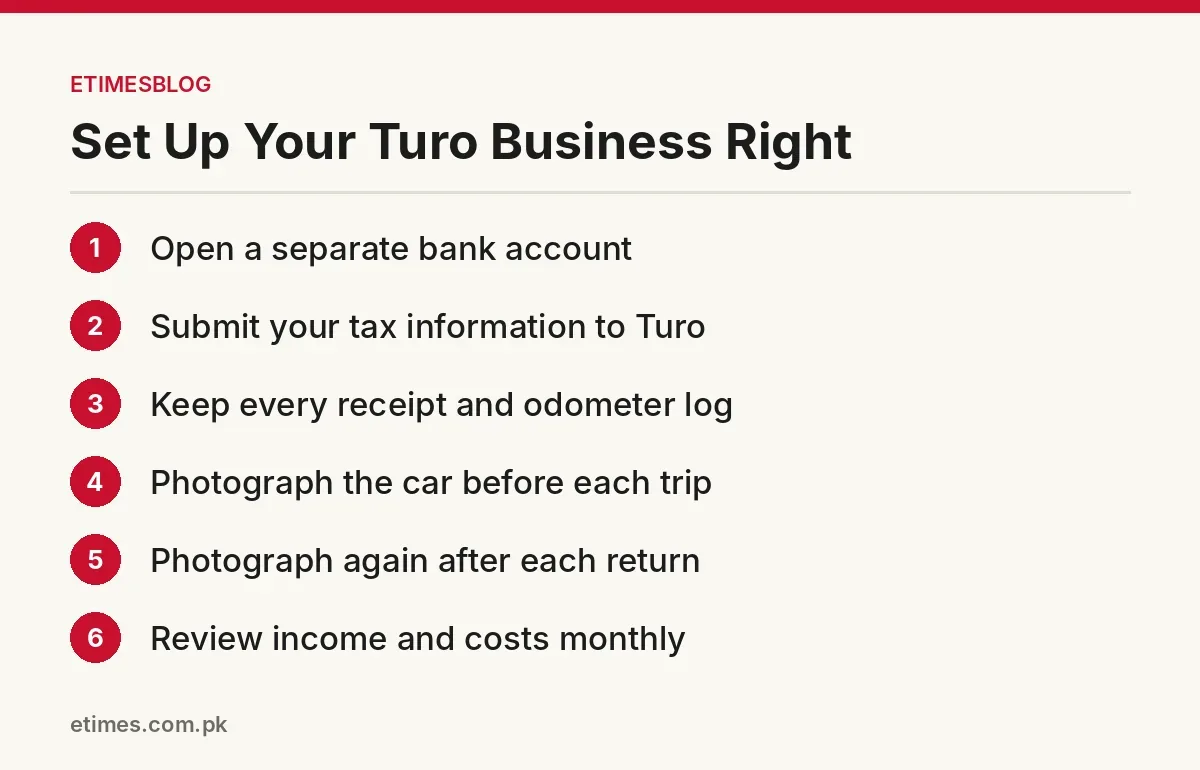
Money and taxes
Open a separate bank account for rental income and expenses. Turo says all US hosts must submit tax information, and its tax page explains that a Form 1099-K goes out only above certain thresholds. The IRS is clear that you must report your income whether or not you receive a 1099-K, so keep every receipt and an odometer log.
A simple trip routine
Before each trip: clean, check tires and fluids, and take time-stamped photos of every panel.
After each trip: photograph the car again, note fuel and mileage, and check for new damage right away.
Every month: review income, costs and upcoming maintenance.
Common Mistakes When You Start a Turo Business
Most early problems come from skipping homework, not from bad luck. These are the ones I'd watch for.
Mistakes to avoid
Buying before checking demand: look at how many similar cars are listed near you and how booked their calendars look.
Ignoring your insurer: listing without telling them can leave you uncovered.
Picking a plan by percentage alone: damage responsibility matters as much as host share.
No buffer between trips: back-to-back bookings leave no time to clean or inspect.
Counting revenue as profit: loan, insurance, cleaning and repairs come out first. Our breakdown of Turo host earnings and what you really keep shows how.
FAQ
How old do you have to be to list a car on Turo?
In the US, Turo's help center says you must be at least 21 years old to list a vehicle.
Can I list a car with a salvage title?
No. Turo requires a clean title, and cars that were ever declared a total loss aren't eligible.
Do I need my own insurance if Turo has protection?
Yes. Turo requires a personal or commercial auto policy that lists the specific vehicle. Ask your insurer whether they allow car sharing before you list.
Can I change my earnings plan later?
Yes, you can change it at any time. The new plan won't apply to trips that are already booked or in progress.
Final Thoughts
To start a Turo business that lasts, get the boring parts right first: an eligible car, proper insurance, an earnings plan you can afford, and clean records. Start with one car, learn your market, and grow from real numbers. You'll find more host guides in our car sharing platforms section, and you can read more about who writes ETIMESBLOG.
This is general information, not legal, tax or insurance advice. Check the official terms for your situation.
ETIMESBLOG is independent and not affiliated with or endorsed by Turo, Getaround or any company mentioned.


Comments